After a truck accident, the truck driver may suggest skipping the police — “let’s just exchange information and let the companies handle it.” It can sound reasonable in the moment, especially if everyone seems okay and the damage looks manageable. It is almost never a good idea.
Calling the police after a truck accident is one of the highest-value actions you can take at the scene. It costs you nothing, takes a few minutes, and creates the single most relied-upon document in the entire claims process: the police crash report. This guide explains why it matters so much, what the report actually contains, and what to do in the situations where officers do not come to the scene.
Why the Police Report Matters So Much
In a regular car accident between two drivers, fault is often straightforward. Truck accidents are different: there may be a driver, a motor carrier, a freight broker, a shipper, and a maintenance company, each with their own insurer and their own version of events. Months later, when memories have faded and stories have hardened, the police report is frequently the closest thing to a neutral account of what happened.
Insurance adjusters treat the police report as a foundational document. It establishes the date, time, and location of the crash, identifies the parties and vehicles (including the truck’s DOT number and carrier information), records the officer’s observations about road conditions and vehicle positions, and notes whether any citations were issued. A citation to the truck driver for following too closely or an hours-of-service violation does not decide a civil claim by itself, but it is powerful supporting evidence.
The report also matters because truck accident claims often involve serious injuries and large potential payouts, which means they are investigated aggressively. Without a police report, it can become your word against a professional driver backed by a company’s legal team. With one, you have an independent third party’s contemporaneous observations on your side.
Are You Legally Required to Call the Police?
In most states, yes — under at least some circumstances. Every state requires drivers to report crashes involving injuries or death, and most set a property-damage threshold (commonly $500 to $2,500, varying by state) above which a report is mandatory. Given the size and weight of commercial trucks, even a “minor” truck accident usually exceeds these thresholds easily.
Failing to report a crash when the law requires it can lead to fines or license consequences, and it can complicate your insurance claim. Your own auto policy may also require a police report for certain coverages. The practical rule is simple: if a commercial truck is involved, call. The downside of calling is a short wait; the downside of not calling can follow you for years.
What the Police Report Actually Contains
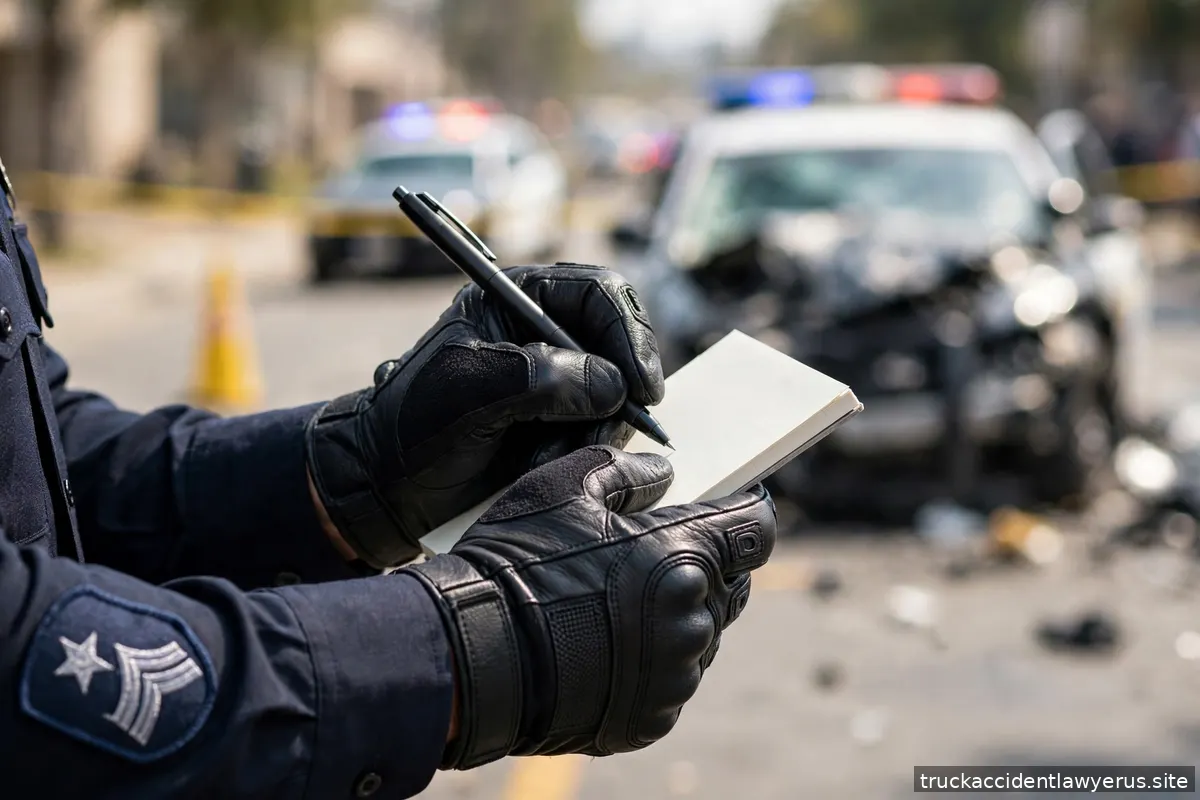
Formats vary by state, but a typical crash report includes the date, time, and precise location; the names, addresses, and license numbers of all drivers; vehicle information including the truck’s make, model, plate, and often the carrier’s USDOT number; insurance information for each party; a narrative section where the officer describes what happened based on observations and statements; a diagram of the crash scene; weather and road conditions; whether anyone was injured and the apparent severity; and any citations issued or arrests made.
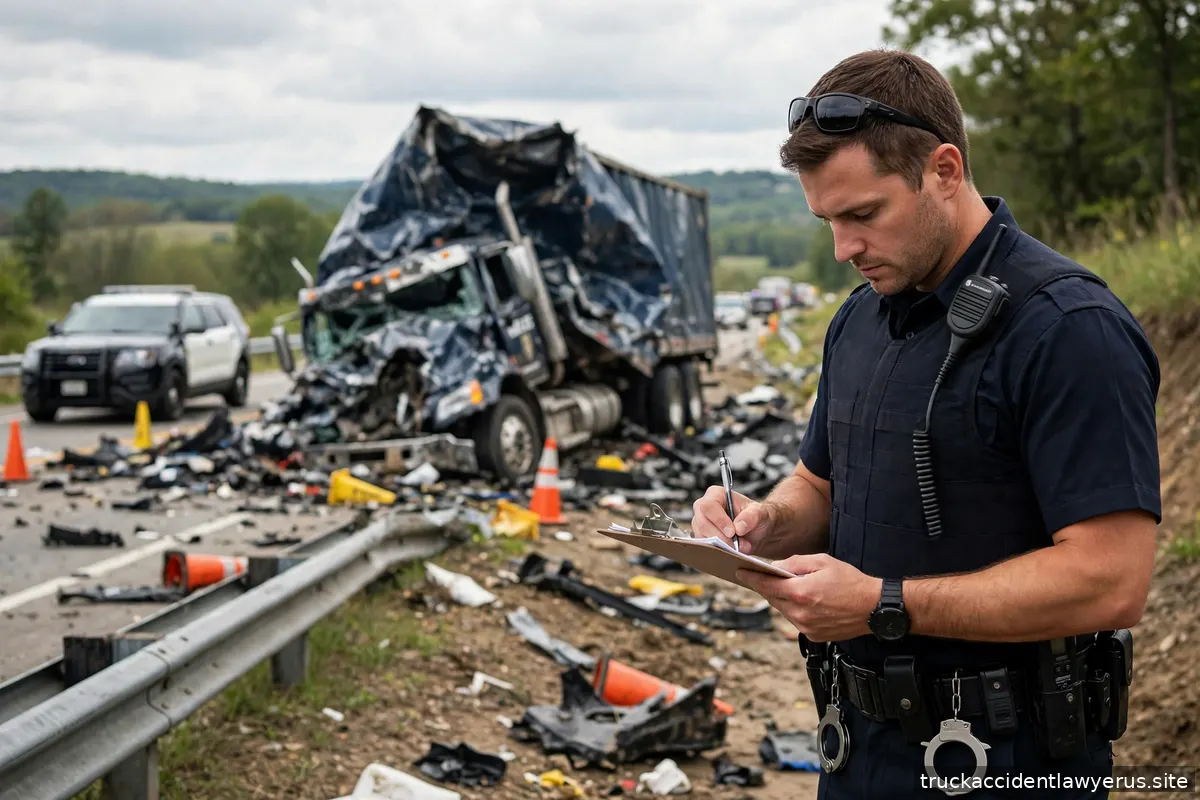
The narrative and diagram deserve special attention. Officers trained in crash investigation document details a civilian might miss — the length and direction of skid marks, the point of impact, the final resting positions of the vehicles. If the officer notes that the truck driver appeared fatigued, admitted to looking at a phone, or could not produce a valid logbook, those observations can become central to a claim. This is also why your own statements to the officer should be careful and factual — they will be written down. Our step-by-step guide on what to do after a truck accident covers how to talk to officers without hurting your position.
How to Get a Copy of the Report
At the scene, ask the responding officer for the report number (sometimes called the incident or case number) and which agency is handling it — it could be city police, county sheriff, or state highway patrol depending on where the crash happened. Reports typically take a few days to a couple of weeks to become available as the officer finalizes paperwork.
You can usually request a copy from the agency’s records division in person, by mail, or through an online portal; many states now publish crash reports through centralized online systems for a small fee. If you hire a lawyer, they will obtain the report as a matter of course. Get your copy as soon as it is available and read it carefully — if you spot factual errors (wrong location, misspelled names, incorrect vehicle descriptions), contact the agency about a correction or supplemental report promptly, while memories are fresh.
What If Police Don’t Come to the Scene?
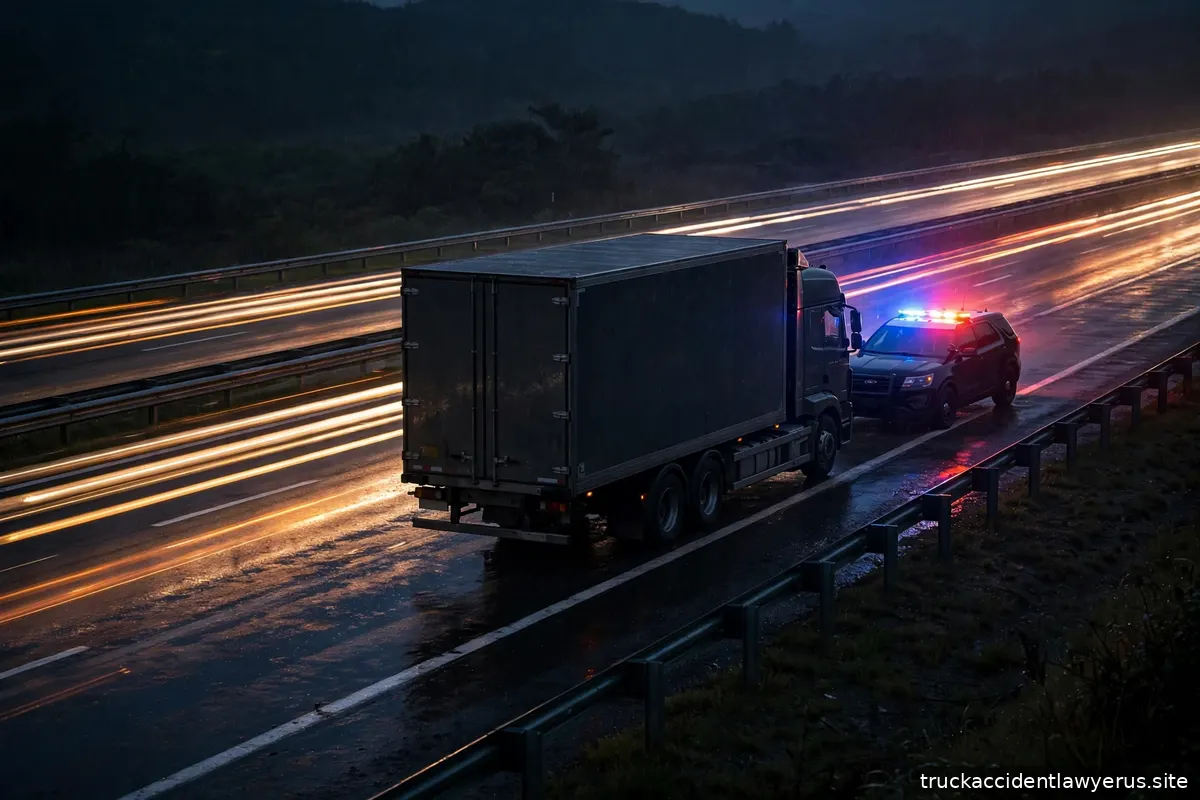
In some jurisdictions, police will not dispatch officers to crashes without reported injuries, especially in busy metro areas. If you call and are told no unit is available, do not just drive away. First, make sure the dispatcher has a record that you called — note the time, the dispatcher’s name or ID if given, and any reference number. Then file a report yourself as soon as possible.
Most states allow drivers to file a self-report (sometimes called a driver’s crash report) with the DMV or state police within a set number of days — commonly 10. These forms ask for the same core facts: when, where, who, what happened. Filing one creates at least some official record. Your own thorough documentation becomes even more important in this scenario, so photograph everything and collect witness information diligently — see our guide on documenting a truck accident scene for a full checklist.
Also notify your insurer promptly and tell them no officer responded; they may send their own investigator. And if injuries surface later — which happens often — go back and make sure a report exists, because the absence of one will be questioned.
Common Myths About Calling the Police
Myth: “If we both agree on what happened, we don’t need police.” Agreement at the scene evaporates surprisingly often once insurers get involved. The driver who apologized profusely may later claim you cut him off. A report locks in the basic facts while they are fresh.
Myth: “Calling police will get the truck driver in trouble, and he’ll retaliate.” Officers document; they do not take sides in civil claims. And a professional driver knows crashes are part of the job — the report is routine paperwork for them, while it may be the backbone of your claim.
Myth: “The police report decides who was at fault.” It does not, legally. Fault in a civil claim is determined by insurers, and if necessary by a judge or jury. But the report’s facts and observations heavily influence those decisions, which is exactly why you want one to exist.
Myth: “I feel fine, so it’s not serious enough for police.” Injuries from truck crashes frequently appear hours or days later. A report filed when you “felt fine” still documents the crash itself, which is what matters.
How Officers Investigate Truck Crashes Differently
When police respond to a crash involving a commercial truck, the investigation often goes a step beyond a standard fender-bender report. Officers may check the driver’s commercial driver’s license (CDL) status and medical certification, ask to see the driver’s hours-of-service logs or electronic logging device, and inspect the truck for obvious safety defects like bald tires or inoperative lights. In serious crashes, a specialized reconstruction unit may be called to map the scene with measuring equipment.
Officers can also request a post-crash drug and alcohol test of the truck driver in certain circumstances under federal rules — something that does not happen in ordinary car crashes. The results of those tests, and even the fact that testing was or was not performed, become part of the record. If you are able to speak with the officer, you can politely ask whether the driver’s logs and credentials were checked; you are not directing the investigation, just making sure routine truck-specific steps are not skipped in the chaos.
This deeper investigation is another reason the report carries weight: it may capture regulatory details — logbook status, vehicle inspection observations — that neither driver would think to document and that become difficult to reconstruct weeks later.
Does a ticket to the truck driver prove I wasn’t at fault?
Not legally, but it helps. A citation is the officer’s judgment that a traffic law was violated, and insurers give it real weight. In a civil claim, though, fault is decided on all the evidence. A ticket to the other driver plus a clean record on your side is a strong combination, but it is not the whole case.
Related guides: Who Can Be Liable in a Truck Accident?, What Is a Truck’s Black Box? ELDs and Event Data Explained, How Truck Accident Settlements Are Calculated.
Frequently Asked Questions
How long does it take to get the police report?
Usually a few days to two weeks, depending on the agency. Complex crashes requiring reconstruction can take longer. Check the agency’s records portal or call the non-emergency line with your report number.
What if I disagree with something in the report?
Contact the officer or the agency’s records division promptly. Minor factual errors can often be corrected; disagreements about conclusions may require a supplemental statement. An attorney can advise on whether it is worth pursuing.
What if the crash happened in a different state than where I live?
The report is filed with the agency where the crash occurred. Most agencies accept out-of-state requests by mail or online. Keep the report number and agency name from the scene — without them, tracking down the report is much harder.
This guide is for general information only and is not legal advice. Reporting requirements vary by state — when in doubt, call and let the dispatcher decide whether to send a unit.