Truck safety regulation moves slowly — rulemakings take years, proposals get revised or withdrawn, and effective dates slip. But the direction of travel in 2026 is clear: regulators are pushing to put more safety technology directly onto trucks, from automatic emergency braking to speed limiters to underride guards. Whether you drive alongside trucks or were hurt in a crash, understanding where these proposals stand helps you understand the safety landscape.
This is a qualitative trends piece. It describes what regulators have proposed or discussed and what the debates are about — not predictions about what will pass, when rules take effect, or any statistics about effectiveness. Regulatory specifics change; check the FMCSA’s official site and the Federal Register for current status.
How Truck Safety Rulemaking Works
Understanding the proposals requires understanding the process. A federal safety rule typically starts with an Advance Notice of Proposed Rulemaking (ANPRM) seeking public comment, followed by a Notice of Proposed Rulemaking (NPRM) with specific proposed language, more comment periods, agency review of comments and cost-benefit analysis, and finally a Final Rule with an effective date — often phased in over years. The whole cycle commonly takes five to ten years, and proposals can stall or be withdrawn at any stage when administrations change or analyses shift.
This slow pace frustrates safety advocates and suits industry groups fine, depending on the rule. It also means “proposed” and “required” are very different things — a distinction worth keeping in mind whenever you read headlines about new truck safety mandates.
Automatic Emergency Braking (AEB)
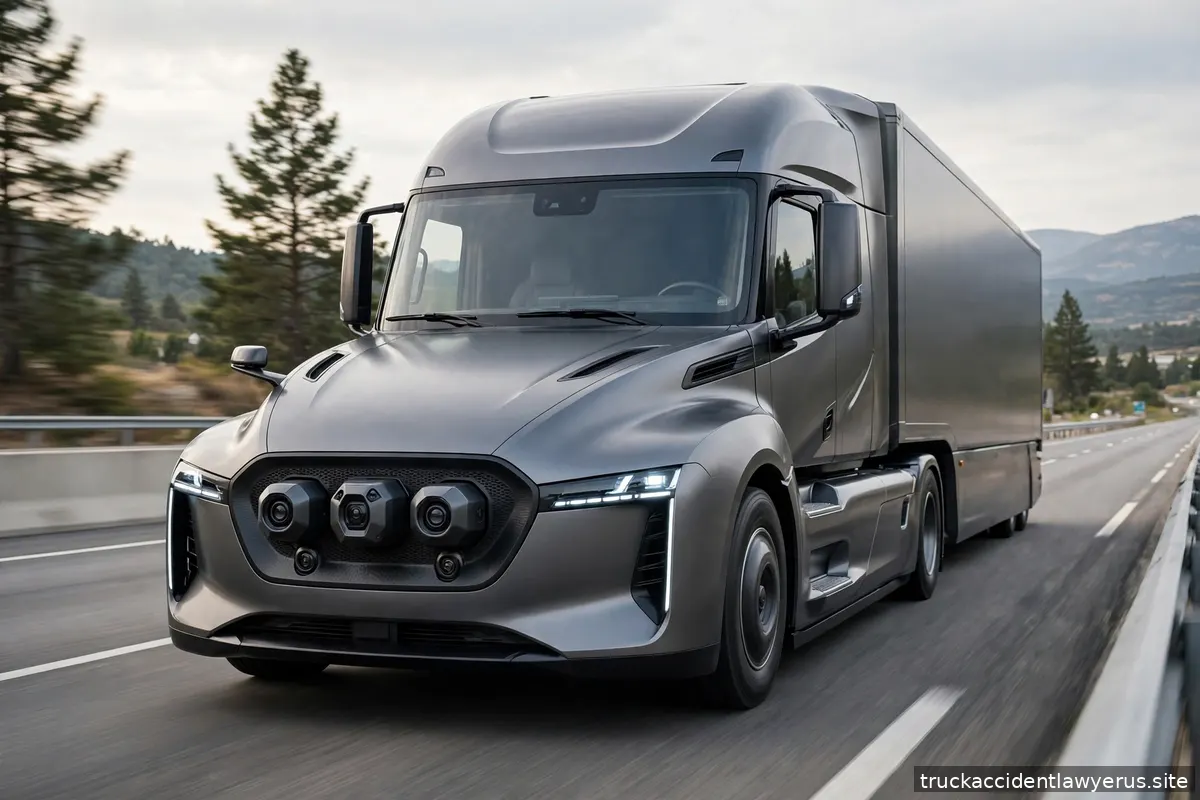
The most advanced major proposal would require automatic emergency braking on new heavy trucks. AEB systems use radar and cameras to detect impending forward collisions and apply the brakes automatically if the driver does not respond — addressing exactly the rear-end crash pattern where a distracted or fatigued driver fails to brake. The technology already exists and is increasingly common as optional equipment; the regulatory question is whether to mandate it.
The debate centers on familiar lines: safety advocates argue the technology is proven and the mandate overdue, while industry groups raise concerns about cost, false-positive braking events, and performance in adverse weather. As of 2026, the proposal has moved through comment stages but faces the usual uncertainty about finalization and timing. If finalized, expect a phased implementation applying to new vehicles first — the existing fleet turns over slowly, so any mandate’s full effect would take a decade or more to materialize.

Speed Limiters
Perhaps the most debated proposal would require speed-limiting devices on heavy trucks — capping truck speeds, with the discussed range centering in the mid-60s mph. Proponents argue that limiting truck speeds reduces both crash frequency and crash severity, since stopping distance and impact energy rise steeply with speed. Many large fleets already govern their trucks voluntarily in exactly this range, which proponents cite as proof of feasibility.
Opponents — including many drivers and owner-operator groups — argue that speed differentials between governed trucks and faster traffic create their own hazards, particularly in passing situations, and that a one-size-fits-all cap ignores varying road conditions. The proposal has a long, politically charged history with periods of advancement and retreat. Its status remains genuinely uncertain, and anyone telling you definitively what will happen is speculating.
Side Underride Guards
Underride crashes — where a passenger vehicle slides under a truck’s trailer — are among the most devastating crash types because the truck’s structure bypasses the car’s crumple zones and strikes the occupant compartment directly. Rear underride guards have been required for decades; side guards, which would protect against the common scenario of a car striking the side of a trailer, have been studied and debated for years.
Regulators have examined side-guard performance through research programs, and advocacy groups continue to press for mandates. The engineering challenges are real — side guards must withstand enormous forces without interfering with loading operations or ground clearance — but the crash mechanics are unforgiving. This remains an area where regulation lags the safety case, and where aftermarket solutions exist for fleets that choose to adopt them voluntarily.
Other Regulatory Fronts
Several additional proposals circulate in various stages. Electronic logging device refinements continue as regulators address gaps and workarounds in hours-of-service enforcement. Speed-limiter and AEB interactions raise questions about how mandates combine. Driver-assistance systems more broadly — lane-departure warnings, blind-spot detection — are being evaluated for potential mandates as the technology matures and costs fall.
On the state level, legislatures periodically consider truck-specific measures: stricter following-distance rules, lane restrictions keeping trucks out of left lanes on certain highways, and enhanced penalties for violations in work zones. State action often moves faster than federal rulemaking and can create a patchwork of requirements that interstate carriers must navigate.

What Regulatory Trends Mean for Accident Claims
Proposed rules do not directly decide claims — only rules actually in effect create legal duties. But the regulatory conversation matters for claims in subtler ways. First, it shapes the standard of care: as safety technology becomes common, the argument strengthens that a reasonably careful carrier would adopt it voluntarily. A fleet that declined available collision-mitigation technology to save money may face uncomfortable questions even without a mandate.
Second, regulatory attention signals where evidence will be richest. If AEB becomes standard, AEB activation logs become standard evidence. If speed limiters are debated, governor settings become a standard discovery request. The claims of five years from now will be litigated with data from the technologies being debated today.
Third, understanding the regulatory landscape helps claimants evaluate carrier safety culture. A carrier that voluntarily adopts safety technology ahead of mandates signals a different culture than one that fights every proposal and runs the oldest allowable fleet. Culture evidence — what the company chose when it had a choice — resonates with juries precisely because it reveals priorities.
Practical Takeaways for Drivers Sharing the Road
Regulatory debates aside, the physics does not change: trucks need enormous stopping distances, have large blind spots, and cannot maneuver like cars. Give trucks space — especially in front, where cutting in deprives the driver of the following distance they need. Avoid lingering in blind spots (if you cannot see the truck’s mirrors, the driver cannot see you). Be extra cautious around trucks on downgrades, in high winds, and in work zones.
And if the worst happens, the regulatory framework is part of your claim’s foundation: hours-of-service compliance, inspection records, and the carrier’s safety history are all discoverable and all relevant. Knowing these systems exist is what lets you — or your lawyer — ask the right questions early. For the immediate steps after any crash, see our step-by-step post-crash guide.
Related guides: Should You Accept the First Settlement Offer After a Truck Crash?, How Truck Accident Insurance Claims Work, What Is Vicarious Liability in Trucking Accidents?.
Frequently Asked Questions
Is automatic emergency braking required on trucks yet?
As of this writing, AEB has been proposed but the rulemaking has not produced a final mandate with an effective date. Many new trucks include it as standard or optional equipment voluntarily. Check current FMCSA rulemaking status for updates — this is genuinely a moving target.
Why do some trucks seem much slower than traffic?
Many fleets voluntarily govern truck speeds — commonly in the low-to-mid 60s mph — for fuel economy and safety. What looks like a slow truck is often a governed truck, and the speed differential is a known traffic-flow issue that the speed-limiter debate centers on.
Can ordinary people comment on proposed truck safety rules?
Yes — federal rulemakings include public comment periods, and anyone can submit comments through the Federal Register process. Safety advocacy groups often organize comment campaigns around major proposals. Individual comments from people affected by truck crashes carry particular weight with regulators.
The Politics of Truck Safety Rulemaking
Understanding why truck safety rules move slowly requires understanding the stakeholders. Safety advocacy groups — often founded by families who lost loved ones in truck crashes — push for mandates with moral urgency and crash-test evidence. Industry associations representing carriers and owner-operators push back with cost analyses, operational concerns, and arguments about unintended consequences like speed differentials. Both sides commission studies, both sides lobby, and the agency in the middle must produce cost-benefit analyses that survive judicial review.
Presidential administrations matter enormously: rulemakings advance, stall, or reverse depending on each administration’s regulatory philosophy, and a proposal near finalization under one administration can be withdrawn under the next. Congressional riders occasionally block or mandate specific rules. This political reality is why timelines are unreliable and why “proposed” should never be read as “coming soon.” For claimants and lawyers, the practical implication is to build cases on the rules actually in effect today while watching the horizon for standards that may reshape tomorrow’s duty-of-care arguments.
What Safety-Conscious Fleets Do Voluntarily
Regulation sets the floor; the best fleets build well above it. Many large carriers voluntarily govern truck speeds, install forward-collision mitigation and lane-departure warning systems across their fleets, run driver-facing cameras with coaching programs (not just punishment), and invest in advanced driver training beyond the legal minimum. Some publish their safety statistics and tie executive compensation to safety metrics — structural choices that reveal genuine priority rather than compliance theater.
This voluntary-adoption landscape matters for claims because it establishes what is feasible. When a carrier argues that a safety technology was too expensive or impractical, the existence of competitors running it fleet-wide at scale undermines the argument. Industry best practice increasingly defines the standard of care that juries apply: the question is not just “did you follow the rules” but “did you do what a careful carrier would do” — and careful carriers keep raising the bar ahead of the regulators.
This guide is for general information only and is not legal advice. Regulatory proposals change status frequently — verify current rules through official sources like the FMCSA and the Federal Register.