“The driver caused the crash — so why is the trucking company paying?” It is one of the most common questions in truck accident law, and the answer is a doctrine called vicarious liability: under certain conditions, an employer is legally responsible for negligence its employees commit while doing their jobs. In trucking, this doctrine is the bridge between a driver’s mistake and the company’s insurance policy — and it fundamentally shapes how claims are built.
This guide explains vicarious liability in plain English: what it requires, where the fights happen (especially the independent-contractor debate), and what it means practically for your claim. General information, not legal advice.
The Doctrine in Plain English
Vicarious liability — lawyers also call it respondeat superior, Latin for “let the master answer” — says that when an employee negligently injures someone while acting within the scope of employment, the employer shares the liability. The employer does not have to have done anything wrong itself. The liability is “vicarious” because it is imposed through the relationship, not through the employer’s own fault.
The policy logic is straightforward: companies profit from putting drivers on the road, so they should bear the costs when those drivers cause harm. It also reflects reality — the company controls hiring, training, scheduling, and supervision, and is usually the party with insurance adequate to compensate serious injuries. Without vicarious liability, injured people would often be left pursuing individual drivers with limited resources while the profitable enterprise walked away.
The Three Requirements
For vicarious liability to apply, three things generally must be true. First, an employment relationship must exist between the driver and the company — the most heavily litigated element in trucking, discussed below. Second, the driver must have been negligent — the doctrine transfers liability for negligence; it does not create liability where the driver did nothing wrong. Third, the driver must have been acting within the scope of employment when the crash occurred.
Scope of employment usually covers driving assignments straightforwardly: a driver hauling the company’s freight on an assigned route is plainly within scope. The edges get interesting — a driver who detours significantly for personal reasons, or who crashes while using the truck off-duty. Courts apply multi-factor tests considering whether the conduct was the kind the employee was hired to perform, whether it occurred during work hours and at an authorized place, and whether it served the employer’s interests at least in part. Minor detours typically stay within scope; major frolics — driving hours off-route for purely personal reasons — may not.
The Independent-Contractor Fight
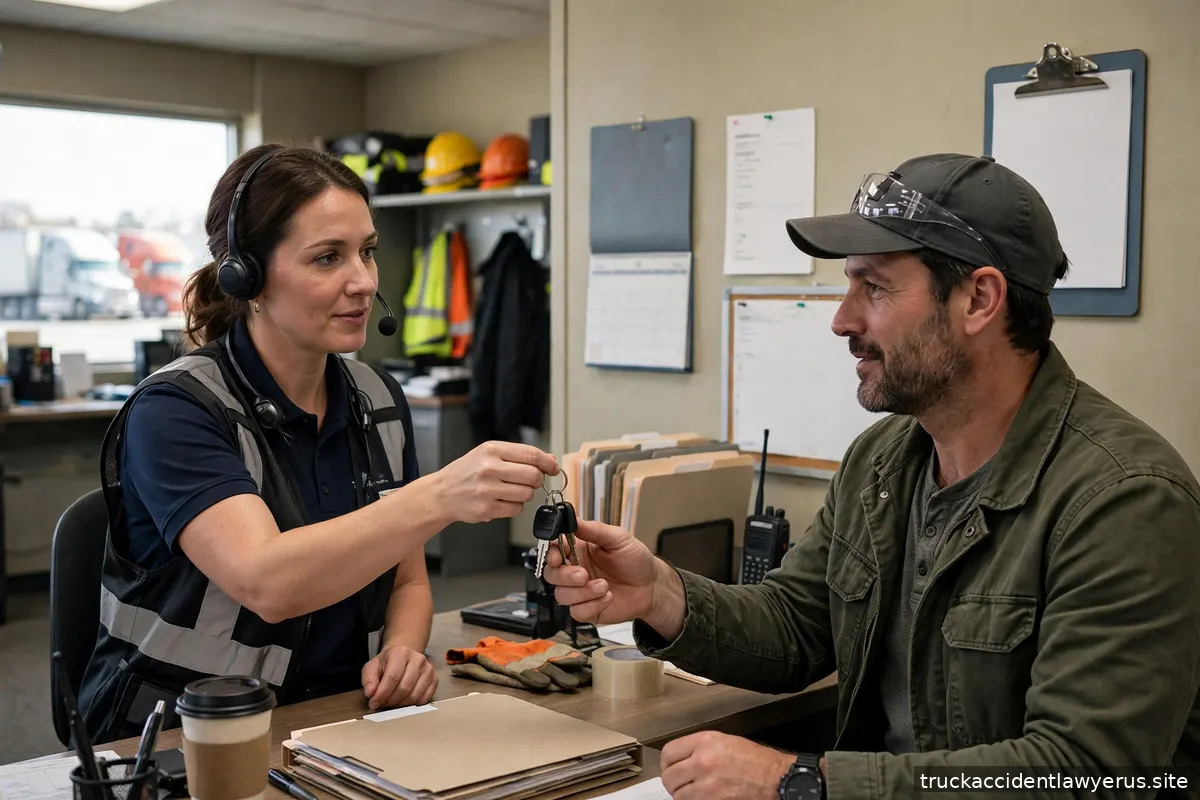
Here is where trucking gets contentious. The industry relies heavily on owner-operators and drivers classified as independent contractors, and carriers routinely argue that contractor status defeats vicarious liability — “he wasn’t our employee, so his negligence isn’t ours.” Courts do not accept the label at face value. They examine the reality of the relationship through control-focused tests.
The factors courts weigh include who owned the truck, who set the driver’s schedule and routes, who controlled dispatch, whether the driver could haul for other companies, who paid for fuel and maintenance, and how the driver was compensated. A driver labeled a “contractor” who drives the company’s truck, on the company’s schedule, under the company’s dispatch, hauling only the company’s freight, looks like an employee to most courts regardless of the contract’s title.
Federal regulations add another wrinkle: under FMCSA leasing rules, the carrier whose operating authority and placards are on the truck is generally responsible for the operation during the lease period. This means the DOT number on the cab door often answers the contractor question more reliably than the employment contract does. Investigators and lawyers know to start with the door placard, not the paperwork.
Beyond Vicarious: The Carrier’s Own Negligence
Vicarious liability is powerful, but it is not the only path to the carrier — and sometimes not even the most important one. Carriers can be directly liable for their own negligence: negligent hiring (putting a driver with a terrible record behind the wheel), negligent training, negligent supervision, negligent maintenance, and pressuring drivers to violate safety rules through impossible schedules.
Direct-negligence claims matter for two reasons. First, they survive even if the contractor defense defeats vicarious liability — a carrier can be directly negligent in hiring an unsafe contractor. Second, they often tell a more compelling story: not just “our driver made a mistake” but “this company systematically chose profits over safety.” Evidence of systemic negligence — ignored violation histories, falsified logs the company should have caught, maintenance deferred to save money — resonates with juries and moves settlement negotiations in ways that a single driver’s error may not.
Smart claims pursue both theories simultaneously: vicarious liability as the reliable bridge to the company’s policy, direct negligence as the pressure that increases the claim’s value. They reinforce each other — a company that hired carelessly and supervised loosely makes the driver’s negligence look less like an isolated incident and more like an expected outcome.

What It Means for Your Claim Practically
Four practical consequences flow from vicarious liability. First, name the carrier early: the driver’s employer (or contracting company) should be on notice from the start, because the carrier controls the most important evidence — logs, maintenance records, dispatch data — and the deepest insurance. Second, do not accept contractor labels at face value: investigate the actual working relationship through the control factors above.
Third, preserve employment evidence: the DOT number on the door, any shipping documents showing who arranged the load, the driver’s statements about who they work for, and photos of company markings on the truck and trailer. Fourth, develop both theories: build the vicarious case (employment + negligence + scope) and the direct-negligence case (hiring, training, supervision, maintenance) in parallel, because each strengthens the other and together they foreclose the carrier’s best escape routes.
One caution: vicarious liability gets the carrier’s policy into play, but policy limits still cap recovery from that policy. In catastrophic cases, the analysis expands to additional parties — brokers, shippers, manufacturers — each with their own vicarious and direct theories. Our overview of who can be liable in a truck accident maps that wider field.
Common Carrier Defenses Against Vicarious Liability
Knowing the defenses helps you see why thorough investigation matters. The contractor defense (discussed above) is the most common. The scope defense argues the driver was off-duty or on a personal frolic — countered with dispatch records and ELD data showing the driver was under dispatch. The borrowed-servant defense arises when a driver was loaned between companies; each company points at the other, and the answer turns on who actually controlled the driver at the time.
Then there is the statutory-employer argument some claimants use affirmatively: under FMCSA regulations, the carrier operating under whose authority the trip ran is the responsible motor carrier for that trip. Rather than fighting the contractor characterization on common-law grounds alone, this regulatory hook can establish carrier responsibility directly. Each of these defenses turns on documents the carrier controls — yet another reason early preservation letters matter.
Related guides: Questions to Ask Before Hiring a Truck Accident Lawyer, 2026: Why More Truck Claims Now Involve Telematics Data, Dealing With the Trucking Company’s Insurance Adjuster.
Frequently Asked Questions
Should I name both the driver and the company?
Generally yes. Naming both preserves all avenues: the driver’s personal liability and the carrier’s vicarious (and direct) liability. There is rarely a downside to naming the carrier when the facts support it, and omitting the carrier risks losing access to the commercial policy.
The driver owned his own truck. Does vicarious liability still apply?
Possibly. Ownership of the truck is one factor among many — what matters more is control over the work: who dispatched the driver, set schedules, and directed operations, plus whose operating authority covered the trip. Many owner-operators driving under a carrier’s authority are treated as employees for liability purposes.
Does the company’s own negligence affect the amount I can recover?
It can. Evidence of systemic company negligence — knowingly hiring dangerous drivers, falsifying records, pressuring hours violations — strengthens settlement leverage and, in some states, can support punitive damages designed to punish and deter. Standards for punitive damages are high and state-specific.
How Scope-of-Employment Disputes Actually Play Out
Most scope disputes in trucking center on gray-area driving: the driver who deviated from the route for food or fuel, the driver running a personal errand in the company truck, or the owner-operator between dispatched loads. Courts resolve these with fact-intensive, multi-factor analysis rather than bright lines — which means the outcome turns on the specifics of what the driver was doing and why.
The carrier’s strongest scope argument is the true “frolic”: a substantial departure from work for purely personal reasons, like driving hours off-route to visit family. The claimant’s strongest response is usually the regulatory hook — the trip was run under the carrier’s operating authority, making the carrier the responsible motor carrier for that operation regardless of the driver’s personal motives. Dispatch records, fuel receipts, and ELD location data reconstruct exactly where the driver was and what they were doing, which is why these records are requested in every serious case.
Practically, scope disputes are expensive for carriers to litigate and uncertain in outcome, which gives them settlement value even when the carrier believes it would ultimately win. A credible scope argument keeps the carrier’s policy in play through negotiation, and carriers know that juries tend to be skeptical of companies disclaiming responsibility for crashes involving their own trucks.
Do federal trucking regulations change the vicarious liability analysis?
They can strengthen it. FMCSA leasing regulations generally make the carrier whose operating authority covers a trip responsible for that operation, which provides a regulatory basis for carrier responsibility independent of the common-law employment test. Lawyers in truck cases routinely plead both the common-law doctrine and the regulatory hook together, so that even if a court views the driver as a contractor, the carrier remains answerable for the trip it authorized.
This guide is for general information only and is not legal advice. Employment and vicarious-liability rules vary by state — consult a licensed attorney about your situation.