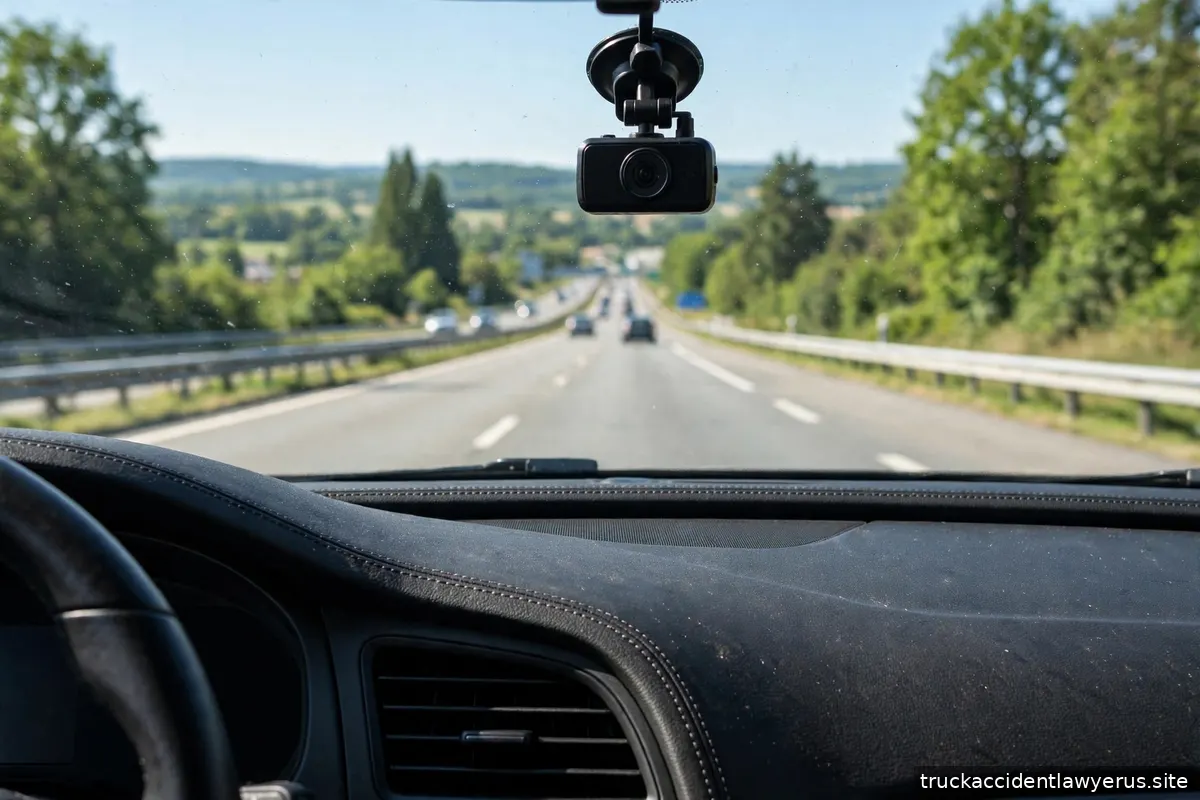
A few years ago, dashcam video in a truck accident case was a lucky break — someone happened to have a camera running. In 2026, it is increasingly the norm. A large share of new cars offer built-in recording, affordable aftermarket dashcams are everywhere, and many commercial fleets now run forward-facing and driver-facing cameras as standard equipment. That shift is quietly changing what happens in the minutes, days, and months after a truck crash.
This is a trends piece, not a prediction: no statistics, no forecasts about case values — just what is observably different about truck accident evidence right now, and what it means for you practically if you are ever in a crash.
The New Normal: Cameras on Both Sides
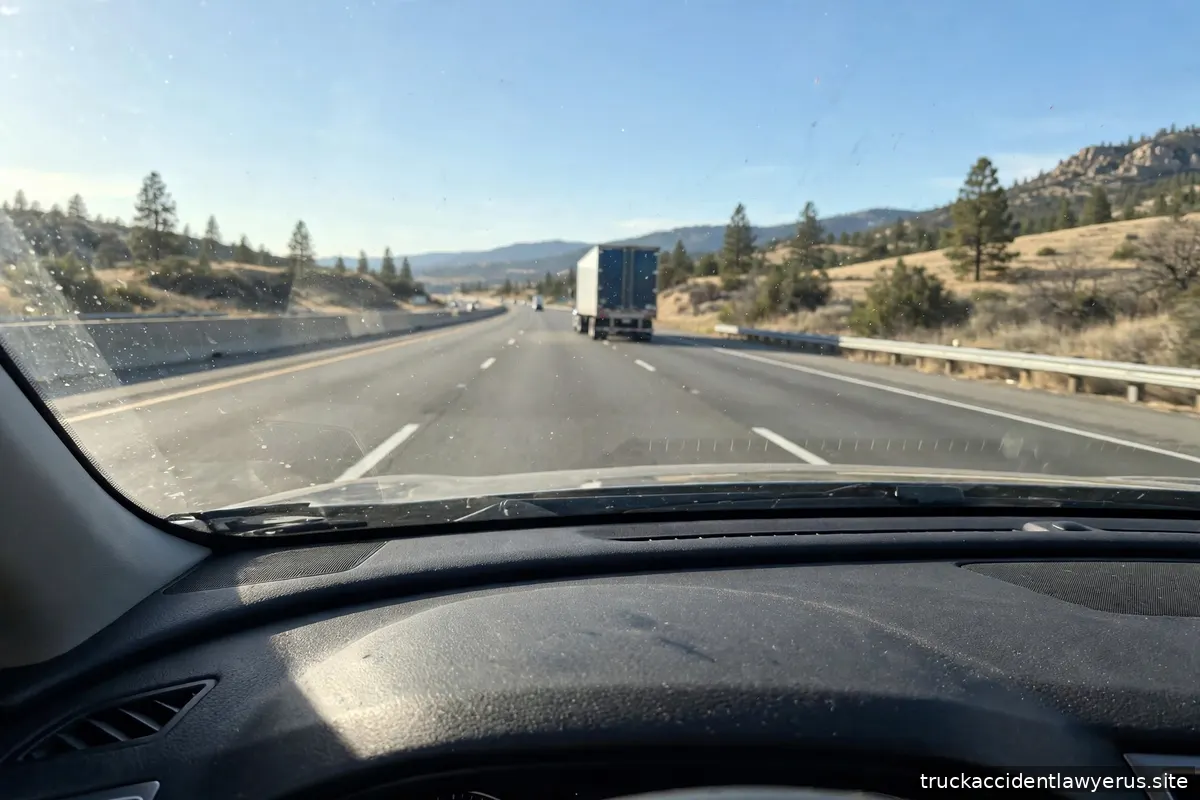
The most important change is that footage often exists on both sides of a crash now. Your dashcam may have captured the truck drifting into your lane; the truck’s own fleet camera may have captured the same event from the opposite angle, plus the driver’s behavior in the seconds before impact. When both videos agree, fault disputes that once dragged on for months can resolve quickly. When they disagree — different angles, different frame rates, one camera obscured — the analysis gets more technical, but there is still far more to work with than two conflicting verbal accounts.
Fleet dashcam systems in 2026 commonly record continuously, upload clips automatically when harsh braking or impact is detected, and retain footage in the cloud. That is good for evidence preservation — cloud-stored video does not get “lost” as easily as a memory card — but it also means the trucking company often has video you do not. Knowing to ask for it early matters.
What Footage Can — and Can’t — Prove
Dashcam video is powerful but not magic. It can show vehicle positions, lane changes, signal use, brake lights, traffic signal states, and the sequence of events leading to impact. It can corroborate or contradict statements about speed, following distance, and right of way. In many cases it settles the central factual dispute outright.
What it usually cannot do: prove exactly how fast a vehicle was going (without analysis), show what a driver was thinking, or capture what happened outside the camera’s field of view. Night footage, rain, glare, and low resolution all limit what video can establish. And a video shows the event, not the context — it will not show that the truck driver was in hour thirteen of a shift, which is why footage complements rather than replaces the full investigation into logs, maintenance, and records.
Preserving Your Own Footage After a Crash
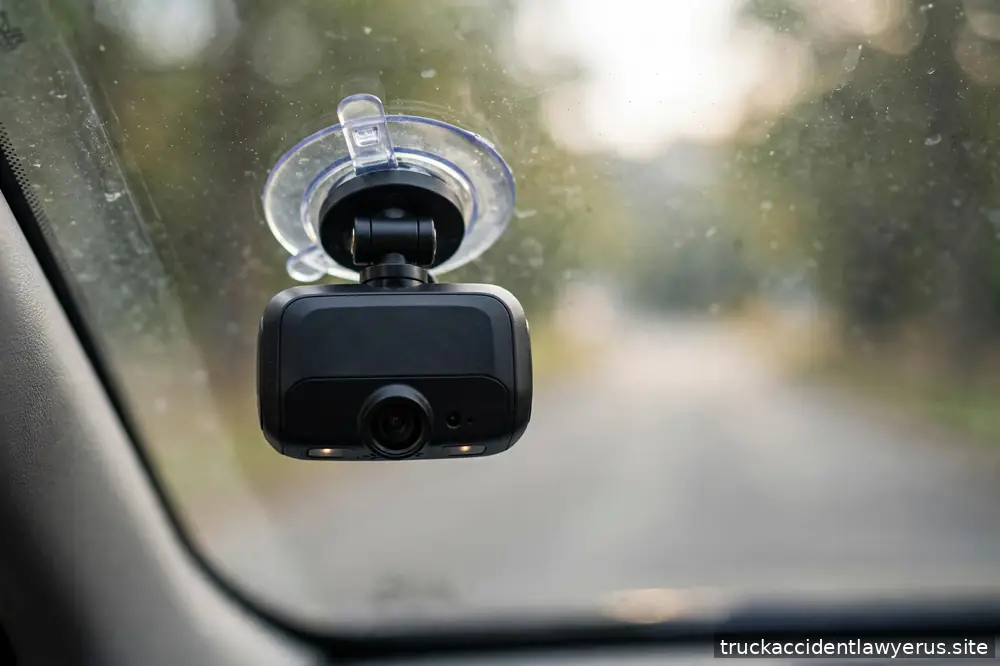
If your dashcam recorded the crash, treat that footage like the valuable evidence it is. Copy the relevant files off the memory card or download them from the camera’s app immediately — many dashcams record on a loop and will overwrite the crash footage within hours or days if you keep driving. Save copies in at least two places, such as cloud storage plus a computer.
Do not edit, trim, or annotate the original files. Keep the raw, unaltered video with its original timestamps intact; edited video invites challenges to its authenticity. If you want to share a clip with your insurer or lawyer, send a copy and keep the original untouched. Note the camera’s make and model too — investigators sometimes need to know the field of view and frame rate to interpret what the video shows.
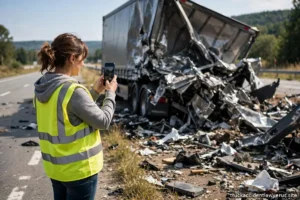
If you do not have a dashcam, check whether anyone nearby might: ask witnesses, and note businesses or homes with visible exterior cameras near the scene. Third-party video gets overwritten even faster than dashcam loops, so these requests are time-sensitive. Our general scene documentation guide covers how to spot and request nearby camera footage.
Requesting the Truck’s Camera Footage
Many fleets will not volunteer their video. If you are pursuing a claim, the truck’s dashcam and telematics footage should be on the preservation list from the start — ideally in a formal written preservation request sent as early as possible, which is one of the practical reasons people involve a lawyer quickly after serious truck crashes. Companies have retention policies, and footage that is not flagged for preservation can be routinely deleted.
Be aware the company’s footage may include a driver-facing camera showing the truck driver. That video can be relevant to distraction or fatigue questions, but it also raises privacy considerations that vary by state — another reason formal legal process, rather than informal requests, is usually the right channel for obtaining it.
Privacy and Legal Rules to Know
Recording video of a public roadway is generally legal everywhere in the United States — there is no reasonable expectation of privacy on a public highway. Audio recording is where it gets trickier: about a dozen states require all parties to consent to audio recording. Most dashcams record audio by default, so know your state’s rule, and consider disabling in-cabin audio recording if you drive in an all-party-consent state and regularly carry passengers.
Sharing crash footage publicly — posting it on social media — is usually legal but often unwise during an active claim. It can complicate negotiations, and anything you post can be scrutinized. Share footage with your lawyer and insurer, not the internet.
Practical Takeaways for 2026
First, if you drive regularly on highways shared with heavy trucks, a dashcam is one of the cheapest forms of protection you can buy — far cheaper than the cost of an unresolved fault dispute. A basic reliable model costs less than a tank of gas for a truck.
Second, after any truck crash, assume video exists somewhere and act quickly to preserve and request it. The window for obtaining third-party and fleet footage is measured in days, not months.
Third, understand that video cuts both ways. Your own footage can exonerate you — or it can show you were following too closely. That is simply the nature of objective evidence, and it is why careful driving remains the best strategy of all. For the bigger picture of how modern truck data is being used in claims, see our companion piece on why more truck claims now involve telematics data.
How Insurers and Lawyers Actually Use the Footage
When footage exists, it tends to collapse the timeline of a claim. Adjusters who once spent weeks reconciling conflicting driver statements can watch a thirty-second clip and move straight to evaluating injuries and damages. Lawyers use video to decide which cases to take, to frame settlement demands, and — when cases do go to trial — to show jurors exactly what happened rather than describing it through testimony.
Video also changes negotiation dynamics. A clip clearly showing the truck crossing the center line leaves little room for the carrier to dispute liability, which shifts the argument to the value of damages rather than who caused the crash. Conversely, footage showing the claimant’s own risky maneuver can end settlement talks quickly. Experienced attorneys review any available video before advising a client precisely because it so often determines the realistic range of outcomes.
One practical consequence: because video is so persuasive, disputes have shifted toward authenticity and interpretation — is the timestamp accurate, was the footage altered, does the angle distort distances? Keeping original files with intact metadata, as described above, heads off most of these challenges before they start.
What if the trucking company’s insurer asks for my footage?
You are generally not obligated to hand it over informally. Anything you share can be used in evaluating — and potentially minimizing — your claim. If litigation begins, video may be subject to formal discovery, but that is a process your lawyer manages. The safe default is to preserve it, tell your lawyer it exists, and let them decide when and how it gets shared.
Related guides: What Is Vicarious Liability in Trucking Accidents?, Do You Need a Truck Accident Lawyer? How to Decide, Should You Accept the First Settlement Offer After a Truck Crash?.
Frequently Asked Questions
Is dashcam footage admissible in court?
Generally yes, if it can be authenticated — meaning someone can testify about where it came from and that it has not been altered. Courts routinely admit dashcam and surveillance video. Specific rules vary by state and by whether it is a civil or criminal proceeding.
Do I have to share my dashcam footage with the other driver’s insurer?
You generally do not have to volunteer it informally, but it may become discoverable in a lawsuit. Talk to a lawyer before deciding what to share and with whom — voluntarily handing over video without advice can backfire if the footage is ambiguous.
What about built-in car cameras like Tesla’s Sentry Mode?
Built-in systems record similarly to dashcams and the same preservation rules apply: download and back up the footage promptly, keep originals unedited, and know that the other side may request it through formal legal process.
Should I buy a dashcam now, even though my crash already happened?
It will not help the claim you are currently pursuing, but if you drive regularly — especially on truck-heavy highways — it is inexpensive protection against the next disputed incident. Look for a model with reliable loop recording, a capacitor rather than a battery for heat tolerance, and enough resolution to read plates at a reasonable distance. Front-only is fine for most drivers; front-and-rear adds coverage for rear-end scenarios.
Do rideshare and delivery drivers’ cameras matter?
They can. Rideshare and delivery vehicles are on the road constantly and many run dashcams, which means a passing rideshare driver may have recorded your crash without you knowing. If the crash happened on a busy road, it is worth asking your lawyer about canvassing for third-party video — rideshare footage has resolved more than a few disputed truck claims in recent years.
This guide is for general information only and is not legal advice. Video evidence rules and recording-consent laws vary by state — consult a licensed attorney about your situation.